


The first phone looked nothing like the phones we use today. Our phones today allow us to do multiple actions, such as call, text, search, play, listen to music and various other activities. All those features are very new; as little as 20 years ago, the only things you could do on the phone were call and text.
The first phone
Many people were trying to design and create the first phone. However, no one could make it so that speech could be passed through it. While other phones were made, Alexander Graham Bell invented the first phone to work. Alexander was the first person ever successfully to have a phone call.
“If I can get a mechanism which will make a current of electricity vary in its intensity, as the air varies in density when a sound is passing through it, I can telegraph any sound, even the sound of speech.”

The Bell System credit: Wikimedia Commons
The image above is a replica of the first phone. The Bell system was the first device that enabled the sound of speech to travel through an object and be received on the other side. This Theory was tested on 10 March 1876 when Bell used the device to talk to his assistant Thomas Watson. “Mr Watson, come here- I want to see you” were used in the first phone call.
Over time Bell worked on improving his design; it wasn’t long before conversations could be held over miles. However, the demand for this device grew. More and more people were expecting to be able to contact whoever they pleased around the world 24/7. This demand meant that the design had to be adapted, and a plan needed to be put in place for these phones to be easier to move and to be used. This ideal was the first to spike the idea of a portable phone (mobile phone).
The first portable phone
“We knew that people didn’t want to talk to cars, or to houses, or to offices; they want to talk to other people … What we believed was that the telephone number should be a person rather than a location.”
The first portable phone was called DynaTAC and was invented and created by Martin Cooper. While the phone was portable, it still was very heavy, weighing over a kilogram. The DynaTac was so new and expensive that it was only available to those on the higher end of society. It was estimated to cost roughly $10,000 in today’s inflation. Many people called the phone The Brick, and that name has still stuck.
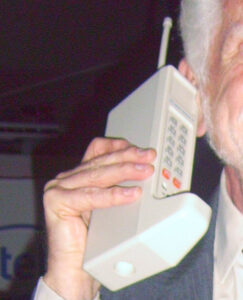
The DynaTAC credit: Wikimedia Commons
As you can see from this picture, the DynaTAC was very bulky. This phone was not something you could slip into your pocket like we do today. Most people who could afford it would carry around a bag dedicated to carrying this phone. The DynaTAC became a publicity stunt. Only those with status had one; it helped people show their importance and wealth.
The first smartphone
The first smartphone was invented in 1992, called Simon Personal Communicator, or IBM Simon. The IBM Simon took two years before it was released. This smartphone was a breakthrough; it was one of the first devices to include built-in programs such as; A calendar, predictive keyboards and address books. The added touch screen and the ability the send and receive emails made the IBM Simon a very high-demand product causing it to sell tens of thousands.
I am sure many of the features that have been mentioned about the IBM Simon remind you of your phone. This is because we still include those same features in the phones we use today. However, they have been adapted and evolved as time has gone on.
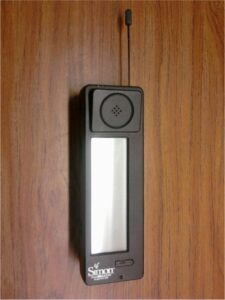
IBM Simon credit: Wikimedia Commons
As you can see from the image, it was still a very bulky device and was not the easiest to use or manoeuvre.
Overview
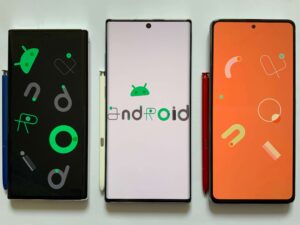
Android smartphones credit: Wikimedia Commons
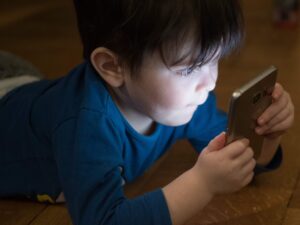
In smartphones today, you will see slight similarities to all the phones that came before. The smartphone you have now and the IMB Simon are much more similar than you think. Over time we have been able to adapt and change the phones to make them easier to transport around and use. This is why the phones you see today are thinner, smaller, and have larger screens. The demand for the IMB Simon was only a tiny glimpse into what the phone market would be today. In today’s society, people as young as five years old will have a phone, compared to the first phone when only those that were rich could have one; it is a major development.
Credit: Wikimedia Commons
Now so many different phone companies release a new phone every year. No one can foreshadow how the phones will change over the next few years. To put it into perspective, it has been 28 years since the IMB Simon was released. With today’s technology, there is no limit to what could happen in the next 28 years.

